
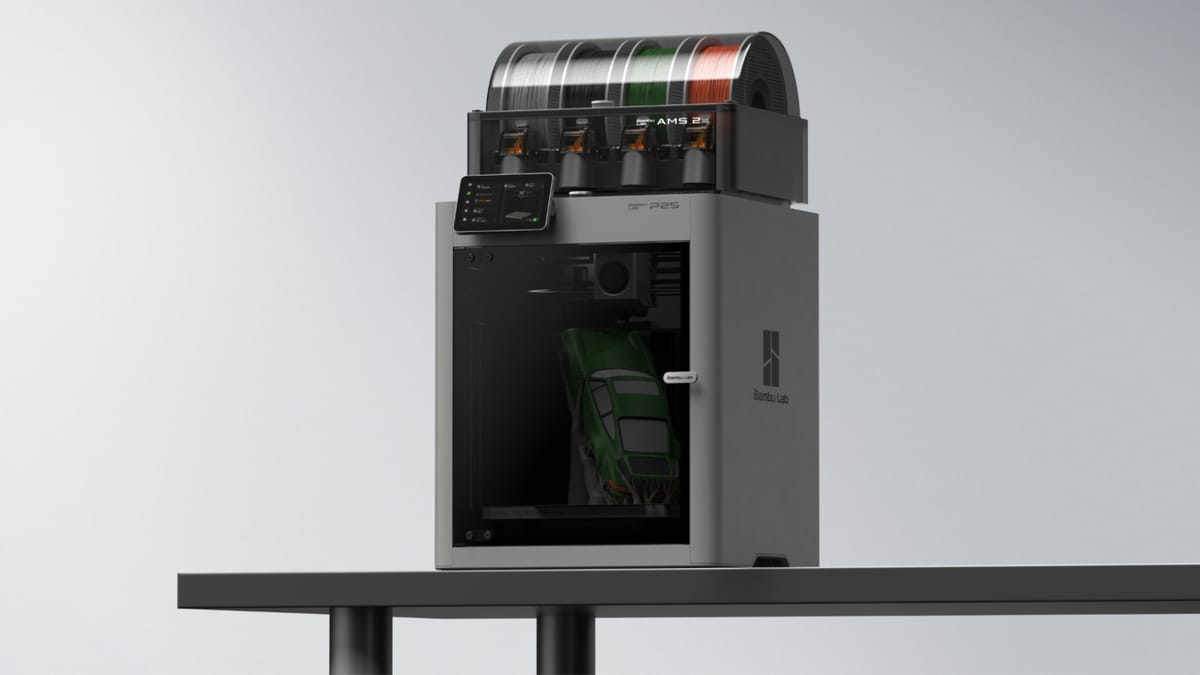
 Bambu Lab’s printers have shaken up the desktop 3D-printing market over the past few years — fast, smart, and surprisingly refined. Now the P2S has arrived, and it’s already one of the most talked-about models of 2025.
But before you hit “buy,” it’s worth looking deeper. The P2S isn’t just a faster version of the P1 series; it’s a smarter, more capable printer that edges closer to professional territory while keeping the ease of use that made Bambu famous.
Here are five essential things you should know before you buy the Bambu Lab P2S — from what’s new under the hood to what kind of user it’s really built for.
1. It’s More Than an Upgrade-It’s a Redesign
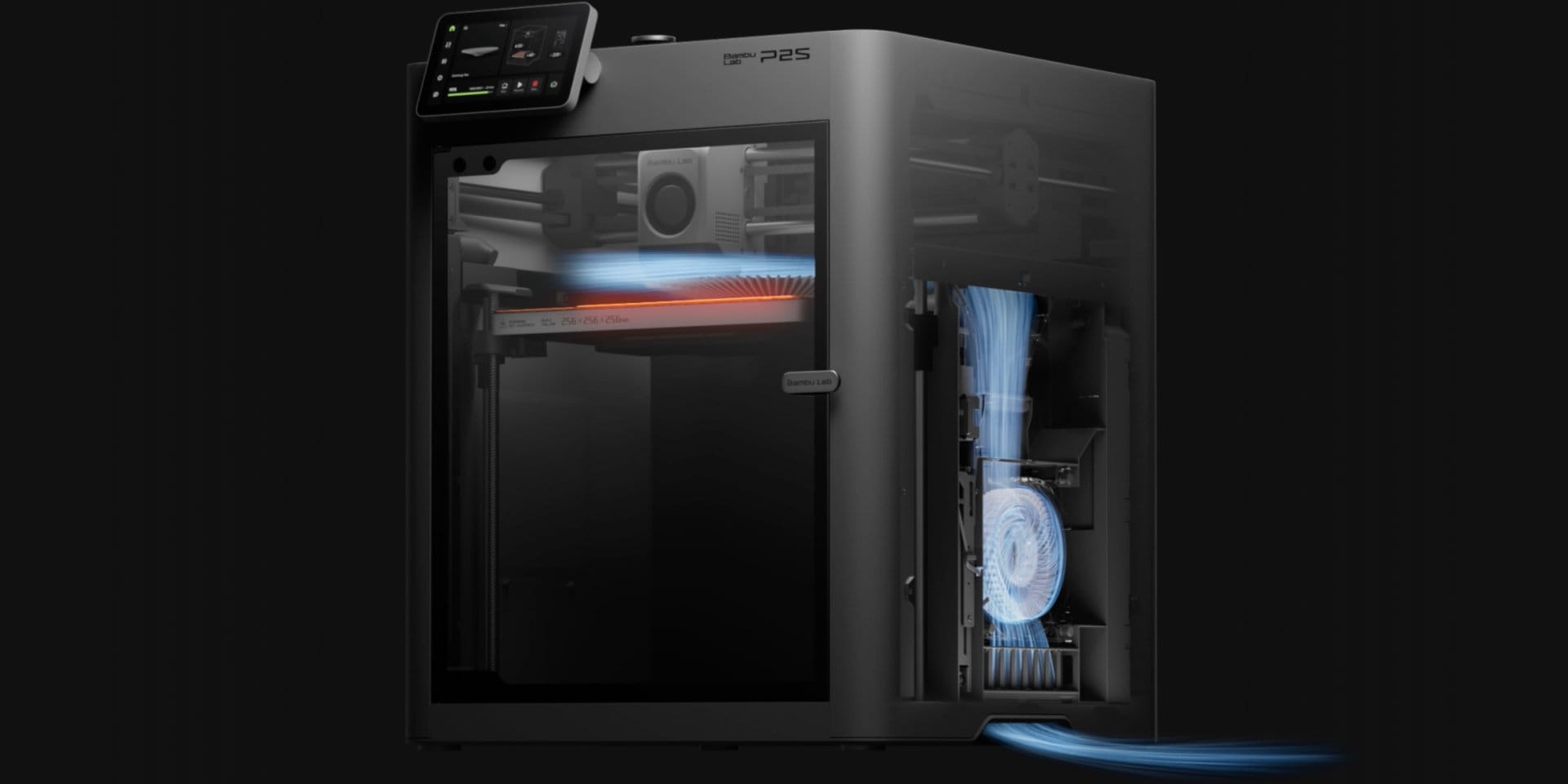
At first glance, the P2S looks familiar. The footprint and form factor echo the P1S, but the internals have evolved significantly. Bambu refined nearly every subsystem: cooling flow, chamber insulation, print-head motion, and vibration control.
The result is a quieter, more stable printer with better temperature management which means cleaner overhangs, smoother walls, and fewer print failures when using demanding materials.
It’s not just a refresh; it’s a re-engineered machine built to bridge the gap between hobby and professional performance.
2. The Camera and Sensors Are Now Smarter
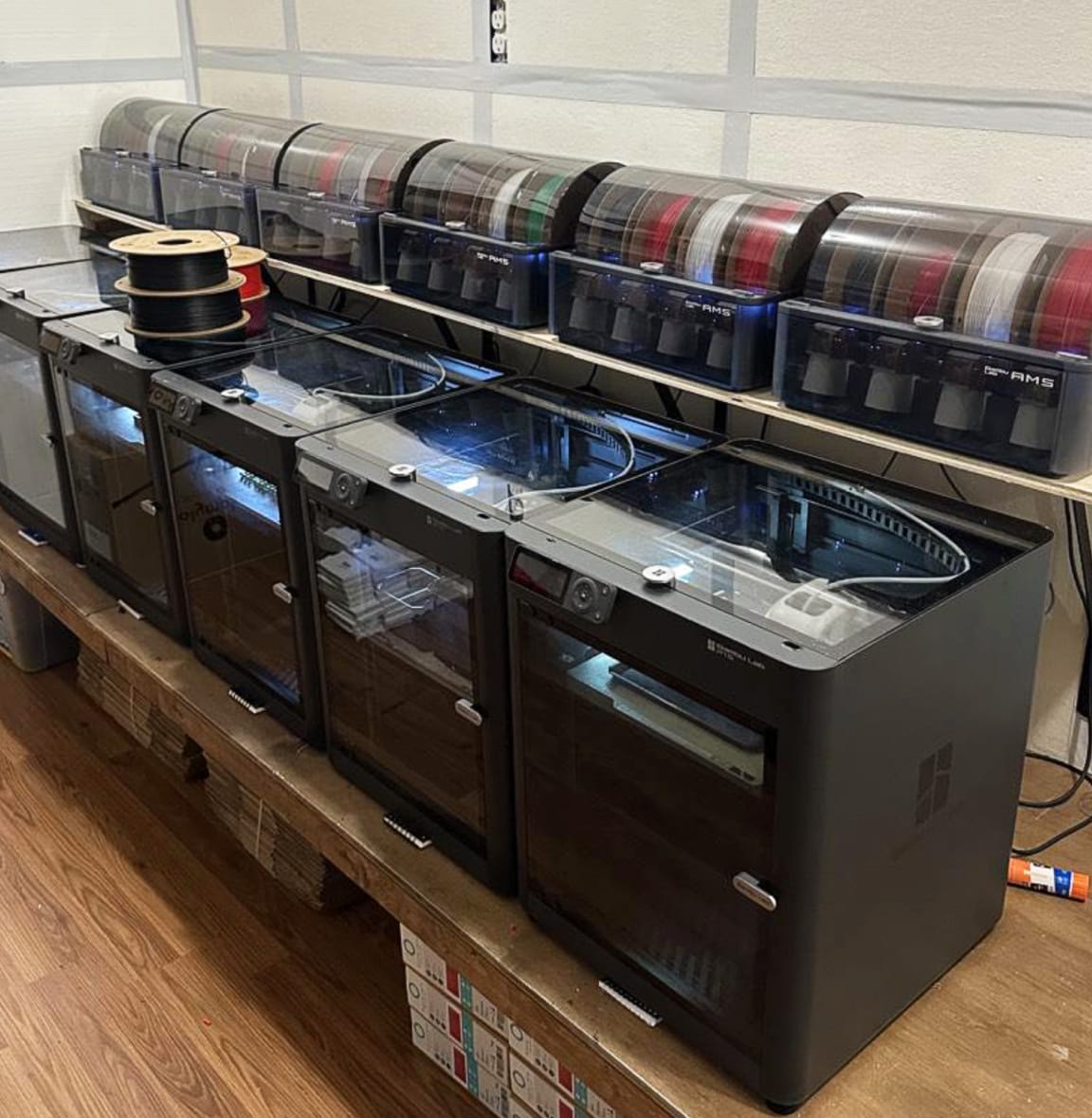
One of the headline upgrades in the P2S is its enhanced AI monitoring system. The dual-camera setup and new sensor suite go beyond simple timelapses — they actively detect print errors, spaghetti failures, and layer shifts in real time.
If something goes wrong, the printer pauses automatically, saving both time and filament. The cameras also offer high-definition remote viewing through the Bambu Handy app, making it easy to check progress from your phone.
This extra layer of intelligence means the P2S can reliably run long, unattended jobs with confidence.
3. Multi-Material Printing Is Still Its Strong Suit
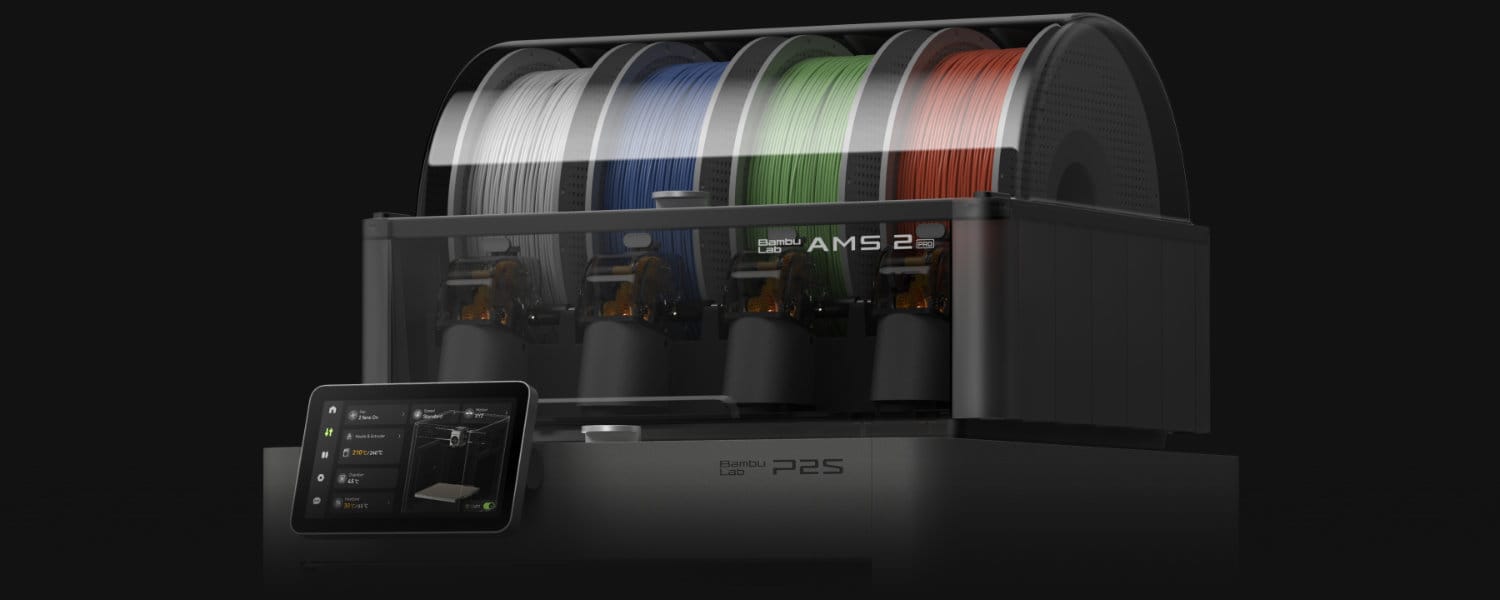
The AMS (Automatic Material System) remains central to the Bambu ecosystem, and the P2S integrates with it seamlessly. You can load up to four filaments per AMS unit — and even daisy-chain units for larger color projects.
The new firmware improves color switching speed and material waste management, so transitions are cleaner and more efficient.
Whether you’re printing a multi-color prototype or combining flexible and rigid materials, the AMS integration on the P2S feels fluid and dependable. It’s still the easiest multi-material setup in consumer 3D printing.
4. Performance and Materials: Faster, Hotter, Tougher
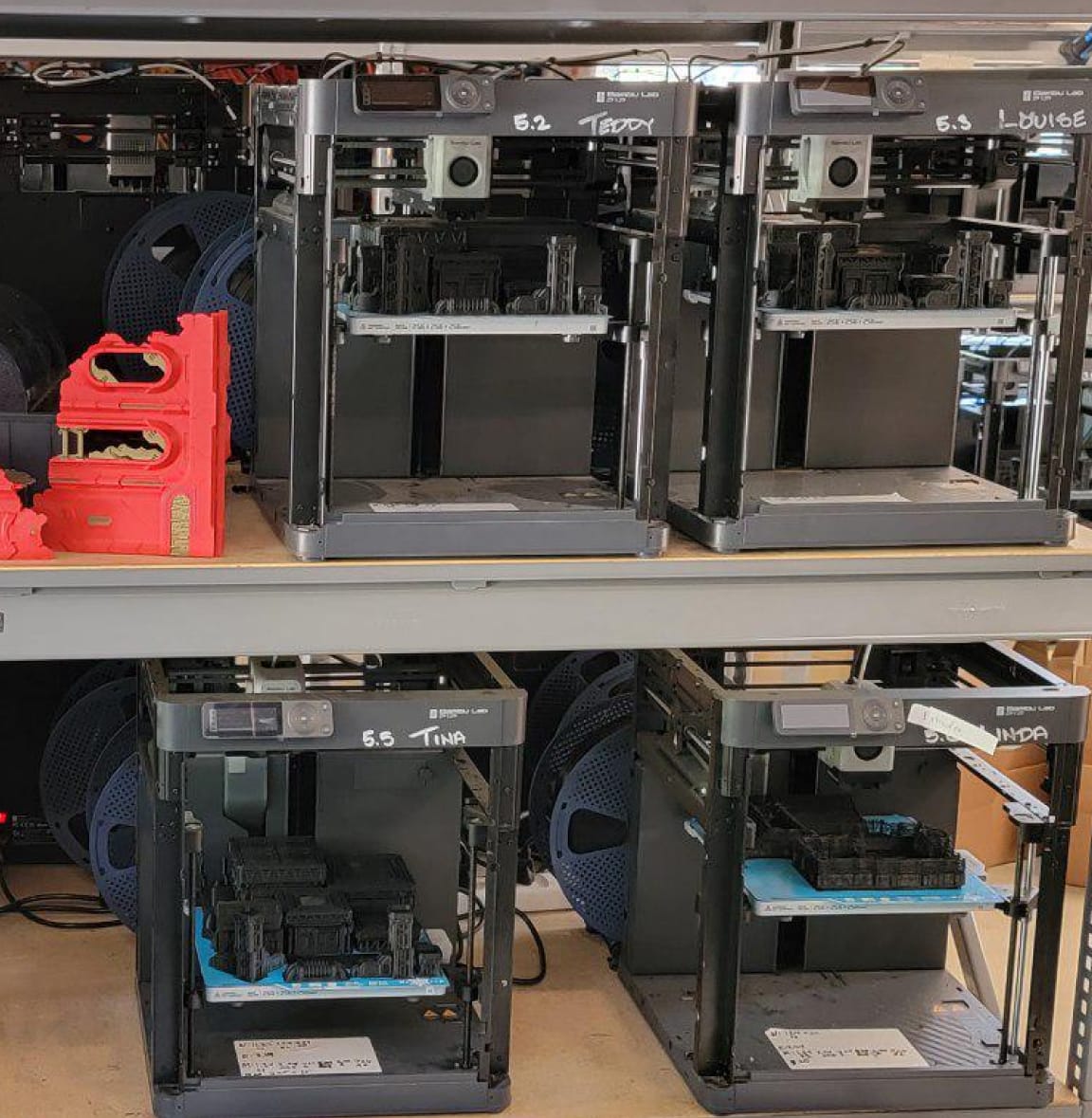
The P2S is capable of sustained print speeds of 500 mm/s with accelerations up to 20,000 mm/s², but that number only tells part of the story. Thanks to improved motion control and cooling, it can actually maintain quality at high speeds — something many fast printers still struggle with.
The hotend and bed both reach 300 °C and 120 °C respectively, which opens the door to advanced filaments like ABS, ASA, and carbon-fiber-reinforced blends. The chamber’s passive heating has also been optimized for more even temperature distribution, reducing warping on large parts.
The takeaway: the P2S isn’t just fast — it’s genuinely capable of engineering-grade results.
5. It’s Part of a Larger Ecosystem
Buying a P2S means stepping into Bambu Lab’s connected world. The printer syncs effortlessly with Bambu Studio (desktop) and the mobile app, letting you send files, track jobs, and monitor performance from anywhere.
Automatic firmware updates keep the printer improving over time, while the company’s curated filament line provides pre-tuned profiles that take the guesswork out of slicing.
That said, this ecosystem is intentionally closed. If you prefer open-source tinkering, third-party mods, or experimental firmware, the P2S may feel limiting. But if you value stability and seamless integration, it’s hard to beat.
Final Thoughts: Should You Buy the Bambu Lab P2S?
If you want a 3D printer that’s fast, intelligent, and consistent, the P2S is a clear standout. It refines the already-impressive P1S platform with smarter automation, better temperature control, and higher-end performance.
However, it’s not for everyone. Makers who enjoy modding or want full control over every parameter may prefer more open systems like Creality’s K2 Pro.
For professionals, educators, and serious hobbyists who value efficiency and print reliability above all else, the Bambu Lab P2S delivers one of the most balanced experiences on the market.
In short:
- Faster and quieter than the P1S
- Smarter monitoring and AI-driven safety
- Refined multi-material workflow
- Excellent surface quality even at high speeds
- Bambu Lab P2S Review: 5 Key Things to Know Before You Buy
The P2S isn’t just a new printer — it’s a glimpse of where consumer 3D printing is headed next.